Counting Game for Kids – Shapes: A Practical Tool for Early Math Learning
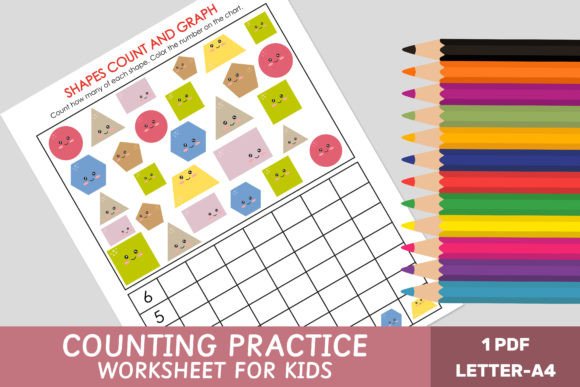
The Counting Game for Kids – Shapes is a hands-on, printable educational resource designed to help children develop foundational counting and shape recognition skills. Unlike digital tools that require screens or setup, this game offers a tactile learning experience that integrates easily into classrooms, homeschooling routines, or family learning time. By combining visual cues with physical interaction, it supports early math development in a way that aligns with how young children naturally learn—through play and repetition.
How It Fits Into a Broader Learning Process
Early childhood education often revolves around building foundational skills that support future academic growth. Counting and shape recognition are critical components of early math literacy. The Counting Game for Kids – Shapes fits into this process by offering a structured yet flexible activity that reinforces number sense and geometric awareness. Whether used as a standalone lesson or as part of a larger math curriculum, this game provides a clear entry point for children to begin understanding numerical relationships and spatial reasoning.
Using the Game at Different Stages
This game can be integrated at various points in a learning or planning cycle. Before starting a math unit, educators or parents can use it as a diagnostic tool to assess a child’s current understanding of numbers and shapes. During a lesson, it serves as a reinforcement activity that can be paired with storytelling, verbal counting, or manipulative-based math exercises. After instruction, it becomes a review tool that allows children to practice independently or with peers, reinforcing retention and confidence.
Integration with Other Tools and Methods
While the Counting Game for Kids – Shapes is a self-contained resource, it works well alongside other educational tools. It can be paired with counting blocks, number charts, or interactive whiteboards to create a multi-modal learning experience. In a classroom setting, teachers can use it in conjunction with group activities or learning centers. For homeschooling environments, it complements structured curricula by offering a low-prep, high-engagement activity that requires minimal setup.
Practical Implementation Tips
Because the game is designed for immediate use, preparation is minimal. The resource includes two print size options—US Letter (8.5” x 11”) and A4 (210 mm x 297 mm)—allowing users to choose the format that best suits their printing capabilities. For durability and repeated use, it’s recommended to print on heavy cardstock paper using high-quality print settings. Laminating the printed pieces can further extend the life of the game, especially in shared environments like classrooms or daycare centers.
Once printed and cut, the game pieces can be stored in labeled pouches or small containers for easy access. This level of organization supports efficient workflow, especially for educators managing multiple learning activities throughout the day. The tactile nature of the game also makes it ideal for children who benefit from kinesthetic learning, allowing them to physically manipulate pieces while reinforcing number and shape concepts.
Workflow Examples
- Classroom Warm-Up: Begin math lessons with a 10-minute session using the game to activate prior knowledge and set a positive tone for learning.
- Small Group Instruction: Use the game during guided math sessions to provide targeted support for students who need extra practice with counting or shape identification.
- Independent Learning Station: Set up the game as part of a rotation system where students engage with it during center time, allowing for differentiated instruction.
- Home Practice: Send printed game pieces home with students for additional practice, especially for those who may need reinforcement outside of school hours.
Factors to Consider for Smooth Integration
When incorporating the Counting Game for Kids – Shapes into a learning environment, several factors contribute to successful implementation. Preparation involves selecting the appropriate print size and ensuring high-quality output for clarity and durability. Compatibility with existing materials is straightforward since the game does not require digital tools or special software—just a printer and basic cutting supplies.
Usability is enhanced by the game’s intuitive design. Children can quickly understand how to match numbers with corresponding shapes, making it suitable for a wide range of developmental levels. Organization is key to long-term use; labeling and storing game components properly ensures they remain accessible and in good condition. Efficiency is another benefit—since the game requires no setup beyond printing and cutting, it can be introduced quickly into any learning session.
Quality Control and Long-Term Use
Ensuring consistent quality involves using the recommended print settings and materials. High-resolution printing on cardstock or laminated sheets prevents wear and tear from repeated handling. For educators or parents who plan to use the game over multiple sessions or with multiple children, investing in durable materials pays off in the long run.
From a long-term use perspective, the game can be revisited as children progress in their math skills. Early learners may start by simply matching shapes and numbers, but as they grow more confident, the game can be adapted to include simple addition, pattern recognition, or even storytelling elements. This flexibility ensures that the Counting Game for Kids – Shapes remains a relevant and engaging tool across developmental stages.
Conclusion
The Counting Game for Kids – Shapes is more than just a printable activity—it’s a practical, adaptable tool that supports early math learning in a way that aligns with real-world educational needs. Whether used in a classroom, homeschool, or family setting, its ease of use, tactile engagement, and compatibility with other learning methods make it a valuable addition to any learning environment. By focusing on preparation, organization, and integration, educators and caregivers can ensure that children receive consistent, high-quality math exposure in a format that’s both fun and functional.